
Screens with and without nudges were tested across three behavioural groups.
← Selected projects02 / 05
Design case study · M.Des thesis
Five ethical nudges for Zomato
Designing, testing and redesigning decision support for organic food choices.
Case study 02 · Design & testing
Could a gentle interface cue make the sustainable option easier to notice?
The design chapter translated behavioural science into a Zomato prototype, tested five nudge patterns and redesigned each one from observed behaviour.
Independent academic concept; not commissioned by or affiliated with Zomato.
10initial nudge concepts
50+high-fidelity prototypes
20+commerce experiences reviewed
99usability participants
5nudges redesigned & retested
Tested & redesigned
- Default
- Social proof
- Loss aversion
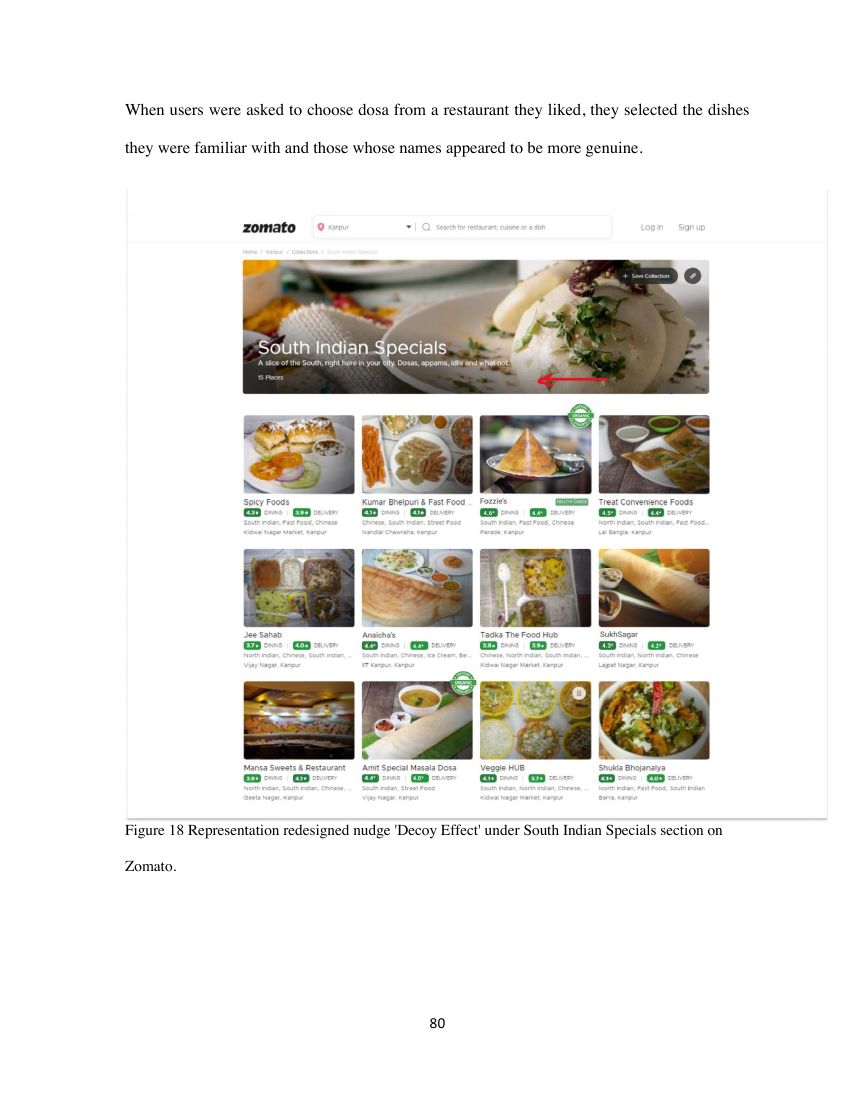
- Decoy effect
- Visual cueing
Designed · held for future study
- Priming
- Framing
- Autonomy
- Exit-intent overlay
- Proximity to goal
01 / Prototype
A believable place to choose
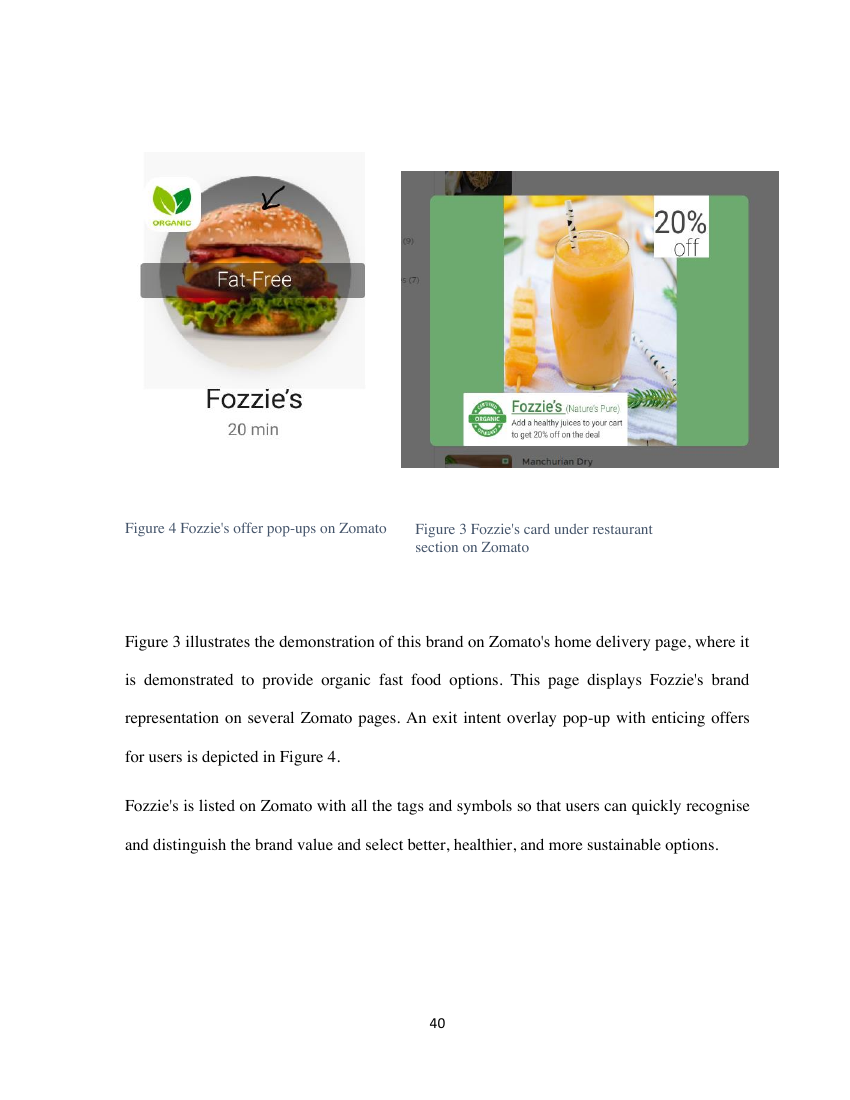
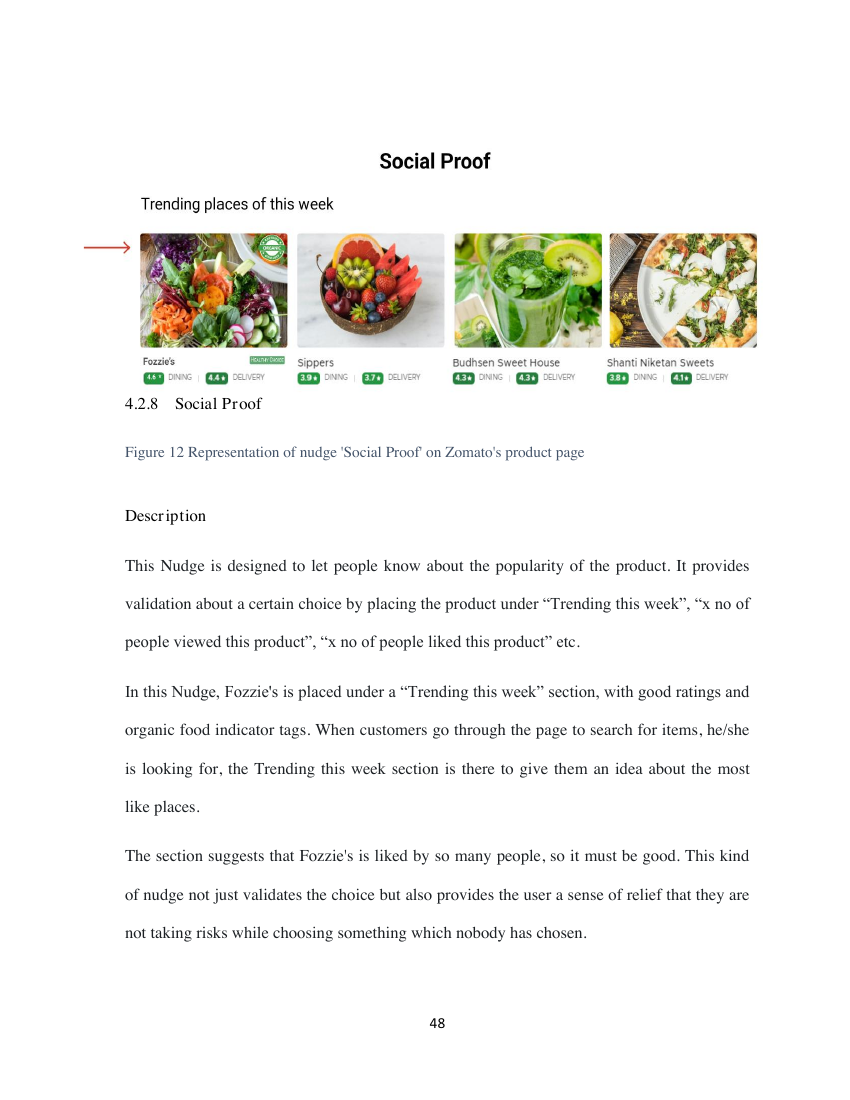
More than 20 food-delivery and e-commerce experiences were reviewed before creating “Fozzie’s,” a fictional organic food chain placed inside a Zomato prototype. Brand cues, organic indicators, offer cards and restaurant placements made the experiment feel like a familiar decision environment.
02 / Test
Two rounds, one learning loop
Copy, placement and visual weight changed in response to usability results.
Redesigned variants were compared with the same KPIs across the three groups.
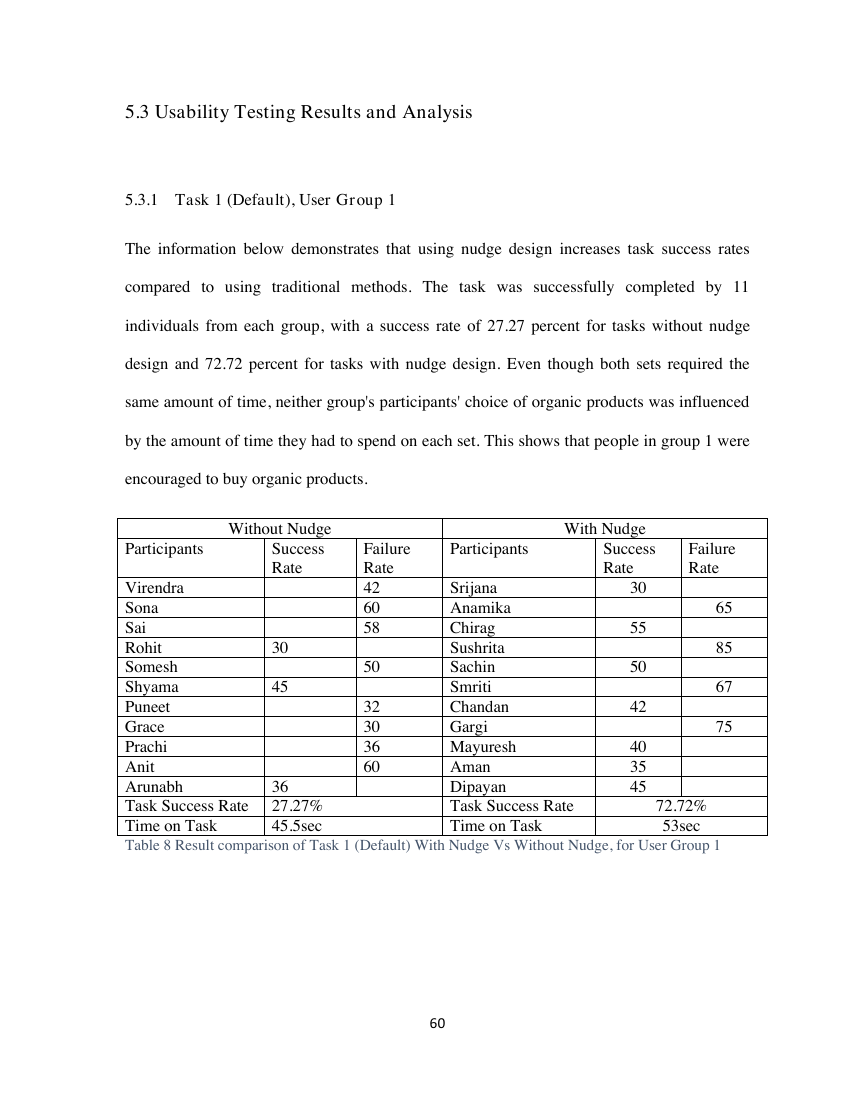
Task Success Rate and Time on Task were the primary measures in task-based Figma sessions completed with minimal prompting.
Nudge by nudge
One group. Five redesign comparisons.
Selected view: User Group 3, initial nudge versus redesigned nudge, from comparison Tables 49-53. Each condition contains 11 participants; other groups and tasks varied.
Default
63.63% → 72.72%Task success57 sec → 40 sec
Time on task
Social proof
45.45% → 54.54%Task success49 sec → 41 sec
Time on task
Loss aversion
45.45% → 63.63%Task success44 sec → 40 sec
Time on task
Decoy effect
45.45% → 63.63%Task success60 sec → 52 sec
Time on task
Visual cueing
54.54% → 63.63%Task success42 sec → 42 sec
Time on task
03 / Learn
Effects varied - so the design decisions stayed specific.
Several redesigned patterns increased task success, several reduced time and one selected time measure held steady. Responses also varied by behavioural group and task, reinforcing that no single nudge worked uniformly.
Make the better option legible, never compulsory.
These are prototype-level findings from small cells of 11 participants per group or condition across a two-city study. They are not Zomato production data or proof of real purchasing behaviour.
What did this teach me?
- 01Agency is part of usability.
- 02Effects are contextual.
- 03Redesign is an ethical act.
Look
closerObserveCueTestRedesign
closerObserveCueTestRedesign
Agency is part of usability.
A successful cue should make an option easier to notice while leaving the person free to ignore it.
Effects are contextual.
The patterns changed task success and time differently across behavioural groups. No single nudge behaved like a universal answer.
Redesign is an ethical act.
Changing copy, placement and visual weight was not cosmetic. It was a response to where the first concepts created friction or ambiguity.